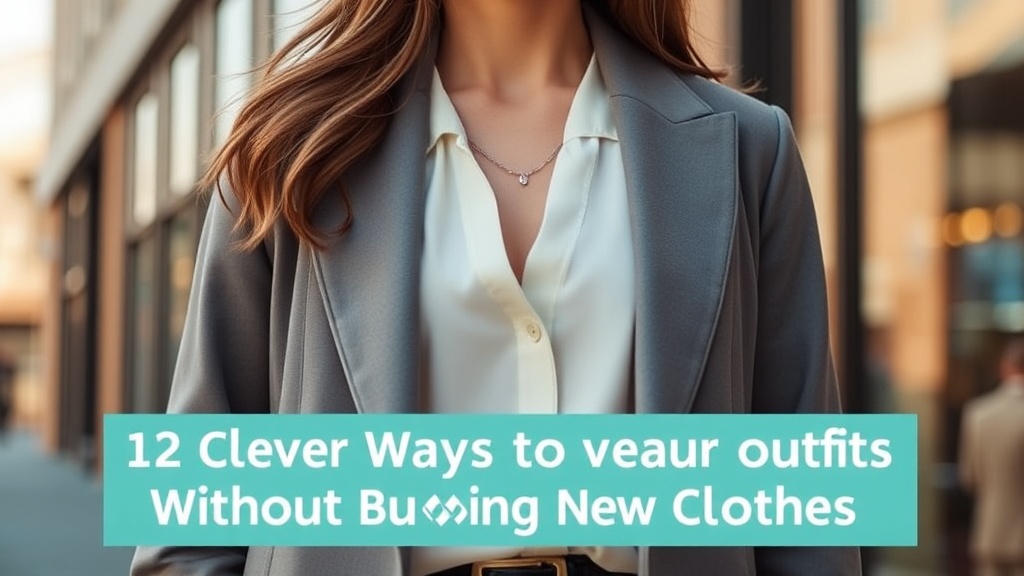
12 Clever Ways to Refresh Your Outfits Without Buying New Clothes

You're standing in front of your closet on a Tuesday morning—coffee in hand, scrolling through your phone for inspiration—and nothing feels exciting. The same striped button-down. That black dress you've worn to three dinners this month. The blazer that's starting to feel like a uniform. Before you open a shopping app or head to the mall, consider this: the clothes you already own have more potential than you realize. This listicle explores twelve creative strategies for making your existing wardrobe feel brand new—no credit card required.
Why Do My Outfits Feel Stale Even With a Full Closet?
The average person wears 20% of their wardrobe 80% of the time. That statistic isn't just about laziness—it's about habit. We reach for the same combinations because they're safe, familiar, and mentally available. Breaking out of this cycle requires intentional experimentation, not new purchases. Start by pulling out five items you haven't touched in three months. Lay them on your bed and treat them like new acquisitions. What would you pair them with if you'd just brought them home from a boutique?
One overlooked technique is the "rule of thirds" from photography—apply it to your outfits by thinking in visual segments. A tucked blouse with high-waisted trousers creates a 1:2 ratio that's inherently more interesting than an untucked shirt. Try half-tucking, French-tucking, or knotting oversized tops at the waist. These small adjustments change proportions entirely and can transform how a piece reads without altering a single stitch.
Can Accessories Really Transform a Basic Outfit?
Absolutely—and this isn't about piling on jewelry until you jingle when you walk. Strategic accessorizing means choosing one element that changes the conversation your clothes are having. A silk scarf tied at the neck takes a white tee from casual to considered. The same scarf worn as a headband or woven through belt loops creates entirely different personas.
Consider investing time in learning one new accessory technique per week. Watch a tutorial on the four classic ways to tie a scarf (the Parisian knot, the simple drape, the cowboy loop, and the necktie fold). Practice the "third piece rule"—every outfit should have three distinct elements: your top, your bottom, and a third component that adds personality. This could be a structured belt, a statement watch, vintage brooch, or even an unexpected bag choice.
Don't overlook the power of hosiery and socks. A barely-visible lace trim peeking from beneath cropped jeans adds romantic texture. Bright socks with loafers or oxfords inject personality into conservative pieces. Tights in unexpected colors (forest green, burgundy, mustard) can make summer dresses feel seasonally appropriate while adding visual interest to neutral palettes.
What Are the Best Layering Techniques for Year-Round Style?
Layering isn't just for cold weather—it's a styling philosophy that adds dimension, solves proportion problems, and creates the illusion of a larger wardrobe. The key is understanding weight and texture relationships. Pair heavy with light, rough with smooth, structured with fluid.
Try these specific combinations:
- Sleeveless sweaters over long-sleeve shirts: This preppy classic works with everything from crisp poplins to tissue-thin turtlenecks. The contrast in sleeve lengths draws the eye and adds complexity to simple pieces.
- Dresses over pants: Once considered avant-garde, this layering technique has gone mainstream. Slip dresses over wide-leg trousers, shirt dresses over jeans, or midi dresses over leather leggings. It solves the "too short for work" problem while creating unexpected silhouettes.
- Turtlenecks under everything: Summer slip dresses become winter-appropriate. Blazers gain a sleek, architectural line. Even strappy evening wear transforms into daytime-appropriate attire with a thin turtleneck base layer.
- Camisoles over tees: The '90s revival isn't going anywhere. Layer a satin camisole over a fitted white t-shirt for instant texture mixing that looks intentional rather than thrown-together.
How Can I Make Old Clothes Look Expensive?
The "quiet luxury" trend has everyone examining construction and fabric quality—but you can fake the effect with careful styling. Fit is the single biggest indicator of whether an item looks expensive or cheap. A $20 dress tailored to your measurements will always look better than a $500 dress that doesn't fit properly.
Learn basic DIY alterations or find a local tailor worth their weight in gold. Taking in a waist, shortening sleeves to the exact right length, or adding darts to remove excess fabric transforms off-the-rack clothing into pieces that look custom-made. Even simple fixes—like replacing plastic buttons with mother-of-pearl or metal alternatives—signal quality at a subconscious level.
Attention to care details matters enormously. Steam rather than iron when possible to preserve fabric integrity. Use proper garment care techniques recommended by fashion professionals to extend the life of your pieces. Remove pills from sweaters and cardigans with a fabric shaver. Polish leather shoes and bags. These maintenance rituals don't just preserve your clothes—they change how you feel wearing them, which changes how you carry yourself.
Is There a Method for Creating Outfit Formulas I Haven't Tried?
Most of us default to one silhouette—maybe it's skinny jeans and flowy tops, or fitted dresses and cardigans. Breaking your own mold requires systematic experimentation. Try the "opposites attract" method: pair your most structured piece with your most relaxed one. Combine your feminine items with something borrowed from menswear. Mix formal with casual.
Create a physical or digital lookbook. Photograph outfits you love—even if you only wear them around your apartment. When you're stuck for inspiration, scroll through your own images rather than someone else's Instagram. You'll start seeing patterns in what you actually enjoy wearing versus what you think you should wear.
Another underutilized strategy is color isolation. Pick one color from your closet—say, rust orange—and challenge yourself to wear only that color for three days. You'll discover combinations you never considered: rust with lavender, rust with olive, rust with navy. Color confidence comes from experimentation, not from following seasonal "color of the year" announcements.
What Role Do Shoes Play in Refreshing an Outfit?
Shoes anchor your entire look—and swapping them is the fastest way to change an outfit's energy. The dress that reads corporate with pumps becomes artistic with ankle boots. Those same jeans-and-tee combinations take on entirely different personalities depending on whether you choose sneakers, loafers, or strappy sandals.
If you're in a rut, try the "opposite footwear" rule. Whatever shoe you'd normally reach for, consciously choose its opposite. Wearing a floaty dress? Skip the delicate flats and try chunky combat boots instead. Heading to a casual brunch in jeans? Trade sneakers for a pointed-toe mule. These juxtapositions create tension and interest that elevate even the simplest combinations.
Consider your shoe collection's color distribution. Most people default to black and brown out of practicality—but a single pair in an unexpected shade (cobalt, terracotta, cream) can transform multiple outfits. Fashion trend analyses from publications like Harper's Bazaar often highlight how unexpected shoe choices define street style moments.
How Can I Create a Personal Uniform Without Looking Boring?
There's a difference between a uniform and a rut. A uniform is intentional—a curated selection of silhouettes that work for your body and lifestyle, executed with variation. Start by identifying your three favorite outfits from the past month. What do they have in common? Similar proportions? Color palettes? Fabric types?
Document these findings and use them as guardrails, not restrictions. If you discover you gravitate toward wide-leg pants and fitted tops, own that preference. Buy variations within that formula: different colors, materials, and details. The confidence that comes from knowing what works for you far outweighs the novelty of constantly chasing trends.
Add variation through textiles and unexpected details. Your uniform might be "structured top + relaxed bottom," but that leaves room for silk, linen, leather, denim, and corduroy. It accommodates a peplum detail one day and a dramatic sleeve the next. The framework stays consistent; the execution stays fresh.
Can DIY Modifications Actually Look Professional?
Strategic DIY isn't about tie-dyeing everything in sight—it's about targeted alterations that solve specific problems. Turn a maxi dress into a midi by adding a series of small knots along the hem. Transform wide-leg trousers into paper-bag waist styles with a simple belt and some strategic tucking. Use a decorative brooch to gather excess fabric at the shoulder of an oversized blazer.
Fabric manipulation techniques like shibori, bleach spotting, or simple embroidery can rescue stained or tired pieces. A small coffee spill on a white shirt becomes the starting point for a scattered dot pattern. Style resources from Who What Wear regularly feature DIY inspiration that looks polished rather than craft-project adjacent.
The key is restraint—one DIY element per outfit, executed cleanly. The goal is elevating, not distracting.
What's the Secret to Making Basics Look Special?
White t-shirts, blue jeans, black trousers—these wardrobe workhorses become invisible through overuse. The secret is treating them as canvases rather than finished pieces. A basic white tee becomes interesting through tuck technique, sleeve roll, or layering. Blue jeans transform based on cuff style (single roll, double roll, uneven roll), shoe pairing, and what you choose to showcase at the ankle.
Examine your basics for quality indicators that justify keeping them. Good basics have substantial fabric weight, clean finishing at seams, and shapes that flatter without clinging. If your basics are thin, pilled, or stretched, no styling trick will save them—but if they're well-made, they deserve styling attention.
Consider the "one memorable piece" approach: pair your most basic item with your most interesting one. The contrast makes both pieces shine. Your simplest black dress becomes the perfect backdrop for that sculptural necklace you never wear. Your favorite statement skirt gets grounded by a plain white button-down. Balance creates visual harmony.
How Do I Build Confidence to Wear Experimental Combinations?
The biggest barrier to wardrobe creativity isn't lack of clothes—it's fear of judgment, including self-judgment. Start small. Wear the experimental outfit to the grocery store or on a coffee run. Live in it for an hour before committing to a full day. Take mirror selfies to see yourself as others see you—often, we imagine outfits looking different than they actually appear.
Create a "risk zone" in your closet: one section dedicated to combinations you're considering but haven't tried publicly. When you reach for the same old thing, force yourself to grab from the risk zone instead. Some experiments will fail—that's data, not defeat. Each failure teaches you something about your preferences.
Remember that most people aren't scrutinizing your outfit. They're thinking about their own to-do lists, their own insecurities, their own plans. The boldness you fear will draw attention usually just reads as confidence—and confidence makes any outfit look better.
Final Thoughts on Shopping Your Closet First
The fashion industry profits from making us feel like we need constant newness. Resisting that messaging isn't just good for your wallet—it's good for your creativity. Constraints breed innovation, and a limited wardrobe forces stylistic choices that abundance never would. Before your next purchase, spend a weekend implementing three techniques from this list. You might discover that what you needed wasn't something new—it was a new way of seeing what you already had.